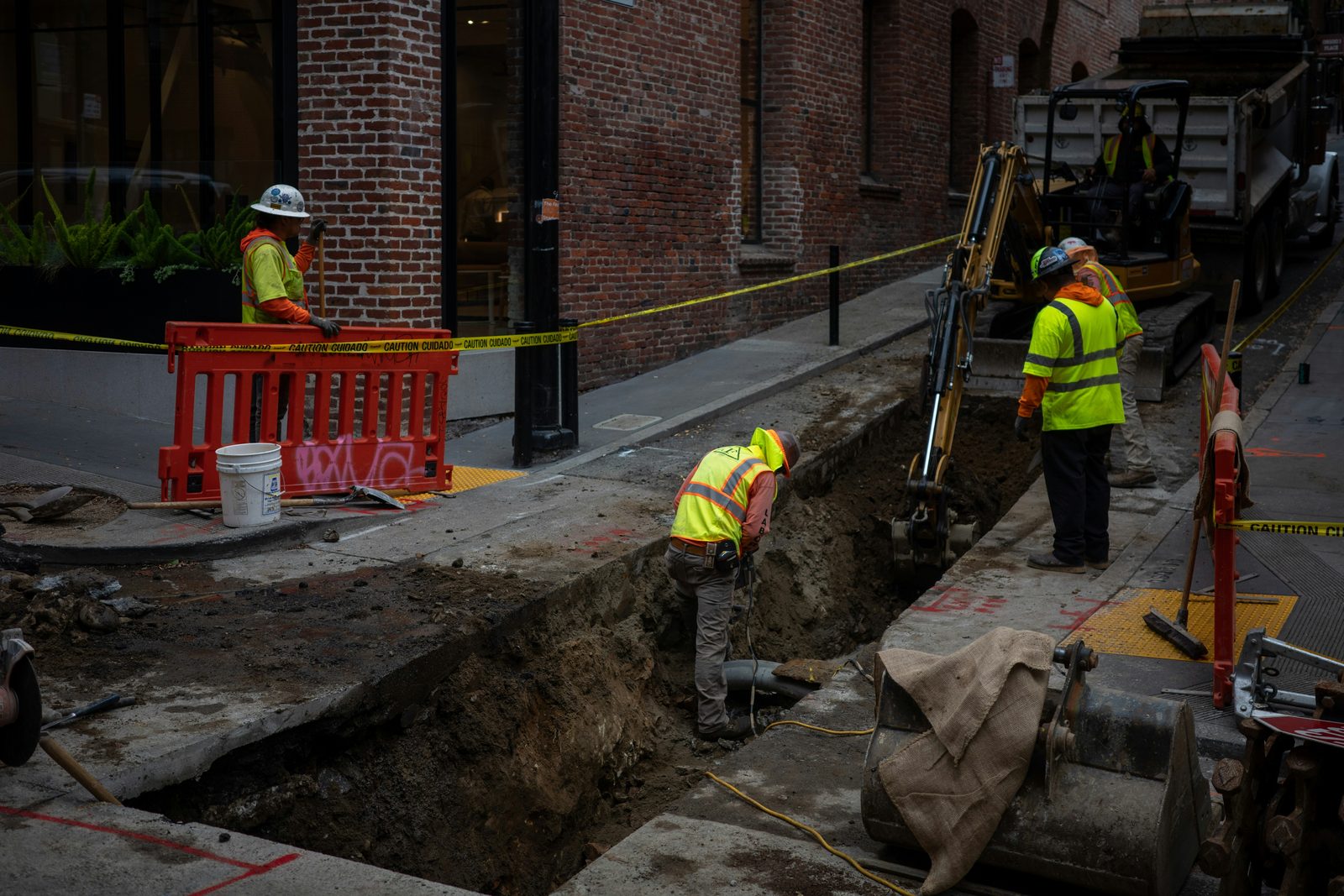
Permits are the part of foundation repair that Pflugerville homeowners rarely think about until a contractor mentions them, and by then the question is usually urgent. Structural work changes how a building carries load, so Texas municipalities generally treat it as regulated construction rather than routine maintenance. Understanding that distinction protects you twice: it keeps the repair legitimate in the eyes of a future buyer, and it prevents an unpermitted job from surfacing as a problem during a resale inspection years later in Heatherwilde, Blackhawk or Windermere.
Pflugerville's building stock explains why this matters locally. Neighborhoods surrounding Lake Pflugerville Park, Pfluger Park and the corridors near Typhoon Texas Waterpark Austin were platted across expansive clay that moves seasonally, and a large share of homes sit on post-tension or conventionally reinforced slabs. Both types can be stabilized, but the engineering approach differs, and documentation requirements follow the engineering. A contractor who treats paperwork as an afterthought is usually treating the structural analysis the same way, which is the more expensive of the two mistakes.
Climate is the underlying reason permits exist for this work at all. Inside the 78660 ZIP code, clay soils absorb water through saturating spring storms and release it through weeks of triple-digit drought, producing the differential settlement that cracks sheetrock and separates brick veneer. Because correcting that movement means transferring building loads onto new piers, jurisdictions want assurance that a qualified professional designed the fix. That assurance normally arrives as a signed engineer's letter or repair plan prepared specifically for the address in question.
Regional access shapes how smoothly the administrative side runs. A specialist already working daily across Pflugerville, Round Rock, Hutto, Manor, Georgetown, Cedar Park and greater Austin has established habits for coordinating engineers, scheduling inspections and assembling closeout documentation. Crews traveling in from outside Central Texas often treat approvals as an obstacle instead of a routine step, and homeowners absorb the delay. Familiarity with local process is not glamorous, but it is one of the clearest markers of a company that finishes projects cleanly.
Bats Foundation Repair, LLC is a Pflugerville company devoted exclusively to foundation repair and structural stabilization across Travis and Williamson counties. Founded in 2017 and supported by more than 40 years of combined team experience, the crew has built a 4.8-star rating from 136 Google reviews by handling both the engineering and the administrative side of a project properly. Free assessments come first, a lifetime transferable warranty comes last, and the documentation in between is what makes the repair verifiable. Visit Bats Foundation Repair, LLC at 18414 N Heatherwilde Blvd, Pflugerville, TX 78660 or call (512) 584-6557 today
In most Texas cities, structural repairs that alter how a foundation carries load are permitted work, and homeowners should assume a permit is likely rather than optional. Requirements vary by jurisdiction and change over time, so confirm current rules directly with the City of Pflugerville building department before work begins. A reputable contractor will initiate that conversation without being asked. If a company suggests skipping the process to save time, treat it as a disqualifying answer. Homeowners weighing contractors more broadly can start with our step-by-step guide to vetting a foundation repair contractor.
Typically a central one. The common Texas pattern is that a licensed professional engineer evaluates the structure, then issues a letter or repair plan specifying pier type, placement, depth and the design intent behind them. That document becomes the technical basis for the permit application and, later, for inspection. It also protects the homeowner, because the scope stops being a contractor's opinion and becomes engineered instruction. A thorough foundation inspection pflugerville tx visit is what supplies the elevation data an engineer needs to work from.
The general sequence in Texas municipalities runs in a predictable order: assessment and elevation survey, engineered repair plan, permit application submitted with that plan, approval, installation, then inspection of the completed work before closeout. Some jurisdictions inspect at an intermediate stage while piers remain exposed, which is why scheduling matters. Exact steps, timelines and documentation differ by city, so verify specifics with the City of Pflugerville rather than relying on general guidance. Companies performing routine house leveling work handle this rhythm as ordinary practice.
Because these are newer, actively transacting Pflugerville neighborhoods where resale scrutiny is high. Buyers' inspectors in Falcon Pointe and Highland Park routinely ask whether prior structural work was permitted and engineered, and an incomplete answer weakens a seller's position at exactly the wrong moment. Surrounding areas including Stone Hill, Springbrook, Bohls and Avalon see the same pattern. Homeowners who choose a documented foundation repair pflugerville specialist rarely face those questions unprepared, because the file already answers them.
It becomes a disclosure problem rather than a structural one, and those are harder to resolve retroactively. Without an engineer's plan or inspection record, a buyer cannot distinguish competent stabilization from an amateur lift, so the safe assumption becomes the negative one. Remedies exist — a current engineering evaluation and a fresh elevation survey can establish the structure's present condition — but they cost time. Starting correctly is far cheaper than reconstructing a paper trail after the fact, particularly when a home is already under contract.
They do, and that matters for anyone owning property in more than one city. Requirements, submittal formats and inspection triggers are set locally, so a project in Pflugerville may follow a different administrative path than a slab foundation repair austin project handled inside the Austin city limits or a job in Round Rock, Georgetown or Hutto. Unincorporated county areas add another variation. Always confirm the rules that apply to your specific address with the jurisdiction that issues its permits, since general summaries cannot substitute for current local requirements.
At minimum it should contain the pre-repair elevation survey, the engineer's repair plan, the permit record, post-installation elevation readings and the written warranty. Together those documents prove what was wrong, what was designed, what was installed and who stands behind it. That package is the single most valuable artifact of a foundation project, because it travels with the property and answers future questions in writing. Readers comparing companies can also review what local homeowners consistently value in our guide to what makes a great foundation repair company. Ready to find the right foundation repair in Pflugerville? Contact Bats Foundation Repair, LLC at (512) 584-6557
Bats Foundation Repair, LLC serves customers throughout Pflugerville and Travis County, including Heatherwilde, Windermere, Blackhawk, Falcon Pointe, Highland Park, Stone Hill, Wells Branch, Avalon, Sorento, Springbrook, Bohls and the Lively Subdivision, plus nearby Round Rock, Hutto, Manor, Georgetown, Cedar Park and Austin. Whether you're in Falcon Pointe or Highland Park, our foundation repair crew is nearby.
Assume yes. Most Texas cities regulate structural repairs that change how a foundation carries load, and Pflugerville homeowners should plan for a permitted process. Requirements do change, so confirm current rules with the City of Pflugerville building department before work starts. A qualified contractor handles the application and coordinates inspections as part of normal project management rather than treating it as an extra.
Typically the contractor, and that is the arrangement homeowners should expect. An experienced Pflugerville foundation specialist prepares the submittal, supplies the engineered repair plan and schedules required inspections. Homeowners are usually asked only to authorize the work and provide property information. If a contractor asks you to pull the permit yourself, ask why, because it can shift responsibility for compliance onto you.
In practice, an engineered plan is the standard basis for permitted foundation work throughout Travis County. A licensed engineer evaluates elevations and soil conditions, then specifies pier type, spacing and depth. That letter supports the permit and gives the homeowner an independent technical record. Even where not strictly mandated, engineered documentation strengthens resale confidence in neighborhoods like Blackhawk and Windermere considerably.
Usually days rather than months, though timelines vary by jurisdiction and workload. The engineering evaluation is generally the longer step, since it requires a site visit and plan preparation. Installation itself often takes two to four working days once approved. Contractors working Pflugerville and Travis County routinely tell homeowners to expect sequencing time for engineering, permitting and the final inspection.
Get a current engineering evaluation and a fresh floor elevation survey. Those documents establish the structure's present condition independently, which is what a buyer's inspector actually wants to see. You cannot retroactively create a permit history, but you can create credible present-day evidence. Pflugerville homeowners preparing to sell often do this early so the disclosure conversation starts from measured data.